Grok Build Online Is More Than a Page Generator: It's an AI Full-Stack Host That Runs Continuously
Hands-on test with Grok Build Online (GBO): Beyond generating web pages, it acts as a continuously running AI full-stack host with database connectivity, live search, and asset generation. Here is a breakdown of its capabilities, boundaries, and practical use cases.

Grok Build Online Is More Than a Page Generator: It's an AI Full-Stack Host That Runs Continuously
What's truly worth watching isn't whether it can generate a landing page, but whether there's a complete environment behind that page capable of running continuously, connecting to databases, retrieving information, and generating assets.
Demos for many AI web builders look impressive, but once you close the browser tab, the project usually remains stuck at the "looks good" stage.
Using Grok in China: https://trygrokai.asia/list/#/home
In a hands-on review published on July 30, 2026, Byte Notebook revealed another facet of Grok Build Online (GBO): it doesn't just output frontend pages—it can host persistently running applications, connect to external databases, and invoke web search and image generation.
Could this bring us closer to true AI full-stack development than simply "generating a webpage"? Judging by the cases in the article, the answer is worth careful study, though there are key boundaries that must be independently verified.

The Real Shift: Applications Start Coming "Alive"
The most informative part of the original article isn't the visual output, but the execution environment.
Through a system information page, the author shows that the app runs on a 2-core Debian GNU/Linux 12 environment. The article also claims that each user receives a "2-core, 2GB" virtual host where apps continue running in the background even after closing the generation interface.
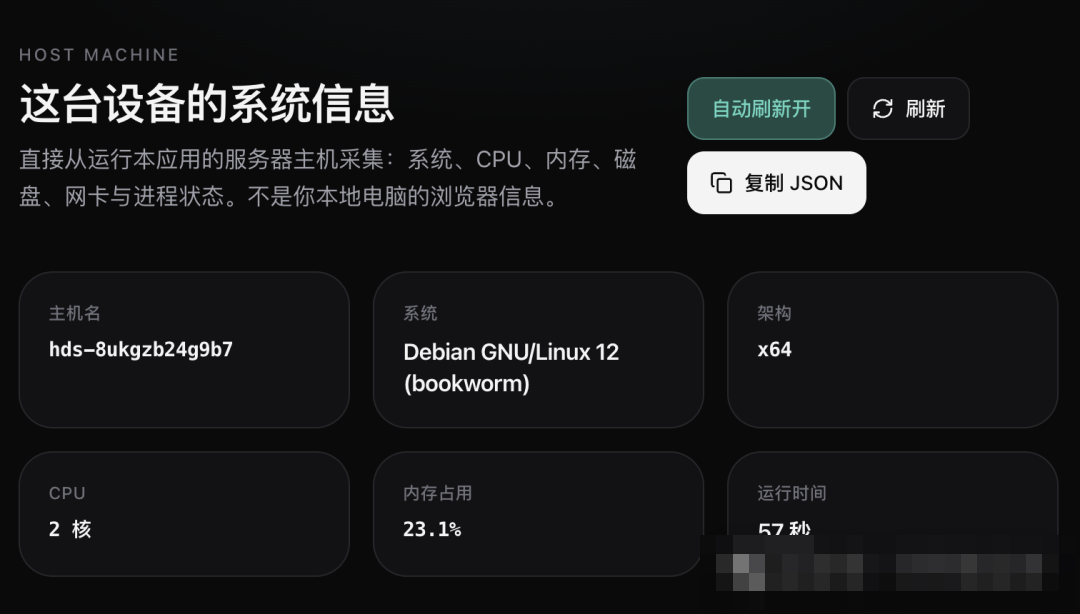
We should be clear about the level of evidence here: the screenshot confirms that the tested environment indeed displayed Debian 12 and a 2-core CPU, but there is currently no public official documentation confirming whether "2-core, 2GB" is provided long-term to every user, how long background execution lasts, or if sleep modes and quotas apply.
Therefore, don't take specs from a single test run as a long-term SLA. Before building production projects, test resource allocation, persistence, networking, and restart behavior in your own account.
CapabilityEvidence in Original ArticleCurrent AssessmentExecution EnvironmentScreenshot showing Debian 12, 2-core CPUVisible in test run; long-term specs pending official confirmationBackground ExecutionAuthor claims apps keep running after tab closureNeeds independent long-term testingFull-Stack DevelopmentArticle states unified TanStack tech stackSupported by case studies; specific versions and limits undisclosedExternal DatabaseGame leaderboard powered by NeonFeasible at case level; verify connectivity and secret management yourselfSearch & Image GenerationWorkflow showing search and image-genScreenshots and finished sites provided; quota and scope pending verificationX Content RetrievalBatch browsing of X postsSupported by screenshots; search completeness still requires manual sampling
From Webpages to Full-Stack: 4 Key Differentiators
1. Capable of Handling Business State
The game site featured in the article includes a leaderboard, with data reportedly stored using Neon. This means the generated output is no longer just static pages—it has begun handling state shared across devices.
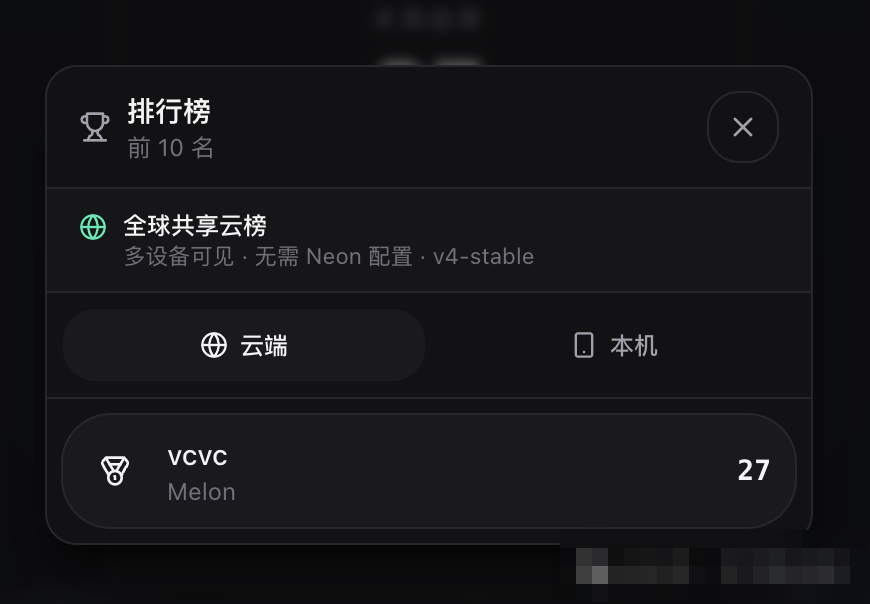
Demo URL: https://relax.grok.me/
As of verification on July 30, 2026, the URL returns HTTP 200. The page title is currently "Sky Hop".
2. Turning Complex Knowledge into Interactive Interfaces
The article presents a Codex tutorial site combining text and visual guides. It structures installation, CLI, IDE extensions, prompts, and security policies into a browsable learning path.
Demo URL: https://codex.grok.me/
To be precise about Codex's official positioning: OpenAI's current manuals define Codex CLI for use in terminals and scripts, and IDE extensions for use alongside code and editor contexts. The example site in the article is a third-party generated tutorial, not an official OpenAI documentation site.
3. Transforming Abstract Concepts into Playable Demos
If you only read the definition of the Token Bucket algorithm, it's easy to forget. The interactive page in the article places capacity, refill rate, request cost, and logs on a single interface, letting users click and observe state changes in real time.
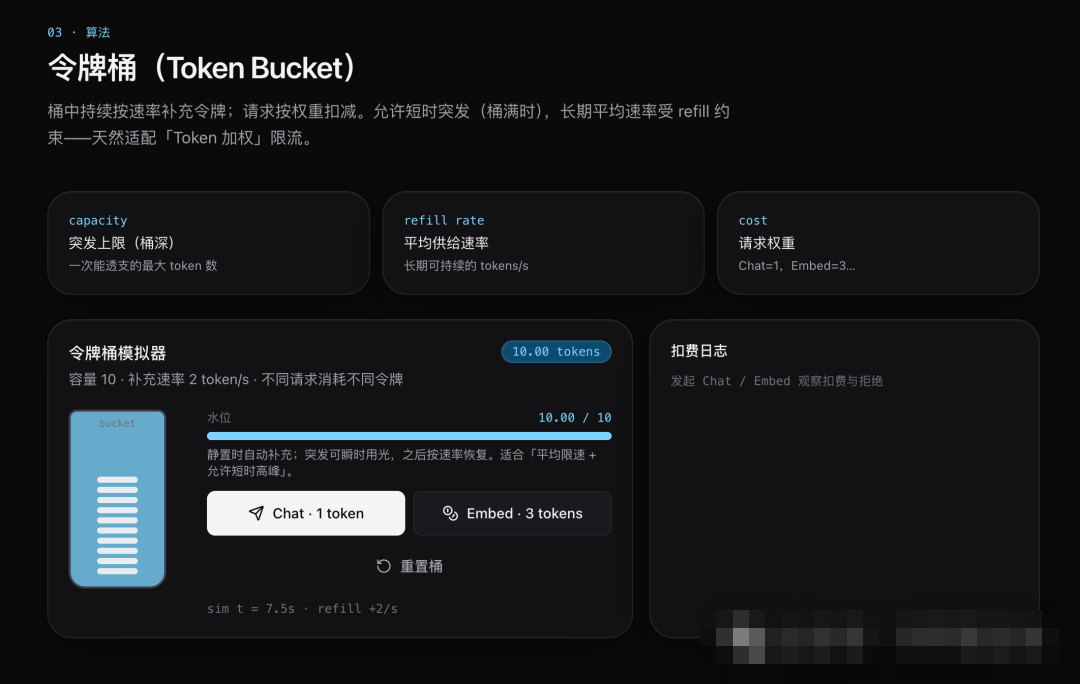
Demo URL: https://lua.grok.me/
Another interactive page example: https://dimt.grok.me/
This setup is ideal for courses, technical documentation, and pre-sales demos. Rather than making readers wade through 20 paragraphs of explanation, giving them an interactive model works far better.
4. Structuring Search Results into Finished Products
The article also demonstrates continuous browsing and research compilation of posts on X. Rather than just returning search snippets, GBO's value lies in chaining retrieval, summarization, and web delivery into one seamless flow.
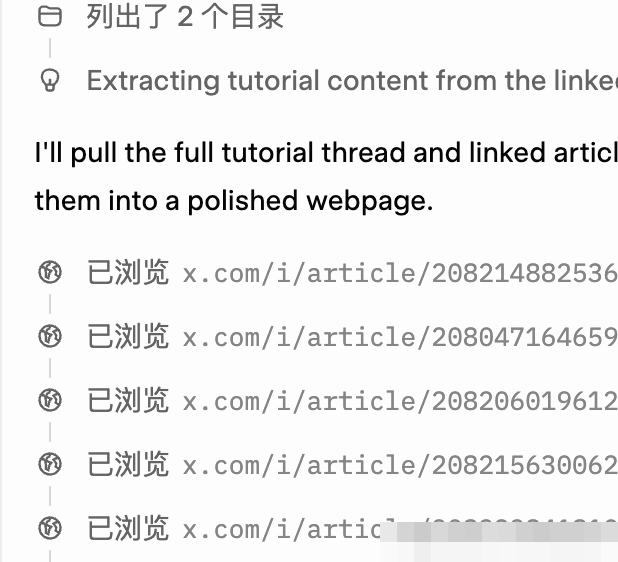
Original demo URL: https://esim.grok.me/
However, being able to search doesn't mean coverage is exhaustive, and curated output isn't guaranteed to be completely accurate. Information regarding pricing, payments, migrations, accounts, or policies must still be double-checked against primary sources.
Tasks Suitable for GBOAreas Still Requiring Human OversightPrototypes, tutorial sites, interactive explainersProduct scope, copyright, and fact-checkingDemo apps with lightweight data persistenceData modeling, permissions, and backup strategiesResearching information and generating curated topic pagesSource completeness and reviewing critical conclusionsQuickly validating a full-stack conceptSecurity, costs, performance, and long-term maintenance
How to Get Started: No Installation Needed, But Confirm the Entry Point First
The original article provided no standalone official portal, pricing tiers, or access details for GBO. The safest approach right now is to enter via Grok's official site: https://grok.com/
If you see "Build Online" in your interface, you can start creating. If you don't see it, avoid downloading so-called desktop clients from unknown third-party sources—simply wait for official rollout or check your account tier capabilities.
Start by testing the environment with a small but complete requirement rather than jumping straight into production builds. Below is a suggested prompt for verification, not an official command:
Please create a persistently running full-stack demo application:
1. Use TanStack to structure both frontend and backend;
2. Provide a page where records can be added, queried, and deleted;
3. Ensure data persists after page refreshes;
4. Display the current execution environment, data storage method, and startup commands;
5. Finally, list any API keys, permissions, and deployment risks that still require manual configuration.
Once generated, don't just look at the home page. Go through these 5 acceptance steps:
-
After closing the generation page for 30 minutes, check if the public URL remains accessible.
-
Add a new record and refresh the page to see if the data persists.
-
Verify whether data is lost after a redeployment or restart.
-
Ensure external API keys are strictly saved in server-side environment variables.
-
Confirm that search results, image sources, and key facts can be traced back to their origins.
Who Should Try It Right Now
Solopreneurs and indie developers can use it to rapidly validate data-backed product ideas without bootstrapping a full stack upfront.
Content creators and educators can transform tutorials, algorithms, or reports into interactive web pages to boost reader engagement and comprehension.
Global AI SaaS teams can leverage it for demo sites, waitlists, and lightweight validation—though permissions, data security, monitoring, cost control, and backups must still be addressed before a formal launch.
If you need to handle payments, user privacy, mission-critical business data, or high-concurrency traffic, you shouldn't rely solely on demo screenshots to host production systems.
Final Thoughts
The most compelling aspect of GBO isn't that it's "yet another AI page builder," but that it unifies page generation, service execution, data connectivity, web search, and asset generation into a single workflow.
This brings us remarkably close to "delivering a runnable application with a single prompt." However, the closer we get to production environments, the less we can afford to ignore resource constraints, secret management, data persistence, and fact-checking.
Thus, the right approach isn't to migrate your entire business overnight, but to use a small, testable project to gauge its true boundaries. Generating a web page is easy; whether an application can survive and run stably over time is the real watershed moment for this next stage, isn't it?
We are the MaynorAI team, sharing insights on AI coding, global AI SaaS tools, and solo developer practices.
Using Grok in China: https://trygrokai.asia/list/#/home
If you found this article helpful, feel free to like, share, and subscribe.